
 EN
EN



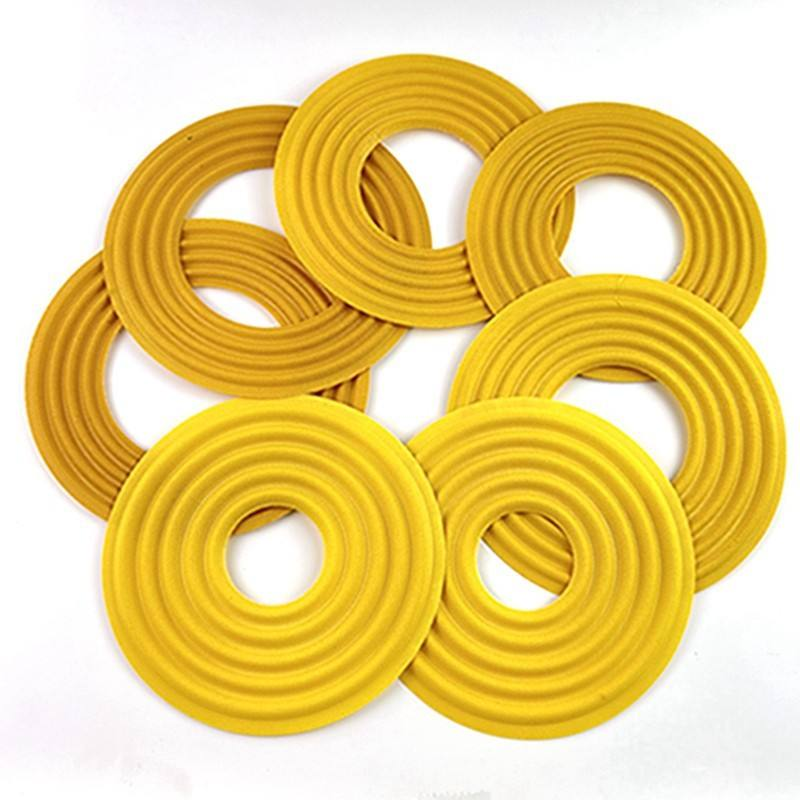
The Mechanical Function of the Speaker Damper (Spider) in Driver Movement
Speaker dampers, sometimes called spiders, serve two main functions at once. They provide the necessary stiffness to keep the voice coil centered inside the magnetic gap, yet still allow for the linear movement needed during operation. These components typically feature a corrugated design made from either fabric or foam materials which helps soak up unwanted vibrations that would otherwise mess with how the speaker cone moves. According to findings published in the 2023 Loudspeaker Component Analysis report, speakers equipped with specially designed dampers showed a significant improvement in sound quality. Drivers using these optimized geometries cut down on off-axis distortion by about one third when compared against regular models. When looking at what makes a good damper, several factors come into play including:
| Design Factor | Impact on Performance |
|---|---|
| Corrugation depth | Controls vertical compliance |
| Material density | Determines restoring force rate |
| Mounting diameter | Affects excursion linearity |
Butyl rubber dampers in premium subwoofers withstand 50% greater peak excursion than traditional foam variants without creep deformation, according to the 2023 Loudspeaker Component Analysis.
Restoring Force and Hysteresis: How Dampers Enable Precision Control
Dampers exhibit viscoelastic hysteresis, dissipating energy during cone movement to prevent overshoot at resonant frequencies. Advanced dual-stage designs use progressive stiffness—high compliance for small signals and increased resistance at extreme excursions—aligning with IEC 60268-5 standards for transient response in professional audio systems.
Case Study: Dual-Stage Dampers in High-Power Subwoofers for Enhanced Stability
In 1,500W RMS subwoofers, dual-stage dampers reduced voice coil offset by 41% during sustained 25Hz tones versus single-layer equivalents. The design combines a 70-durometer outer ring for centering with a 50-durometer inner layer for mid-excursion control, achieving Qts values below 0.3 for tight bass reproduction.
Impact of Damper Design on Bass Response and System Resonance
Controlling Low-Frequency Oscillations and Excursion Limits
Speaker dampers work by controlling how far the voice coil moves back and forth, which helps cut down on distortion when playing those really low frequencies between about 20 and 80 Hz. Systems that aren't properly damped can actually create harmonic distortion reaching around 7%, according to research published in the AES Journal last year. When it comes to stiffness optimization, these dampers keep the speaker cone from moving more than plus or minus 4 millimeters in subwoofer applications, so they don't hit the physical limits of their movement range. There's also evidence from a recent 2023 study on driver fatigue showing that dual layer foam dampers bring down those annoying vibrations after the initial movement by nearly 19% compared with regular single layer versions.
How Damper Stiffness Influences Qts and Enclosure Performance
Damper stiffness directly affects the driver’s total Q factor (Qts), shaping enclosure compatibility:
| Damper Stiffness | Qts Range | Ideal Enclosure Type | Bass Characteristics |
|---|---|---|---|
| High | 0.5–0.7 | Sealed | Tight, controlled |
| Medium | 0.3–0.5 | Hybrid Bandpass | Balanced decay |
| Low | 0.2–0.3 | Ported | Extended resonance |
Stiffer dampers raise Qts, favoring sealed enclosures with critically damped roll-offs (-12 dB/octave). Compliant dampers enable ported designs to reach lower F3 points but require precise tuning to avoid group delay issues.
Case Study: Sealed vs. Ported Enclosures with Variable Damper Stiffness
A 2023 comparison of identical 12— drivers found:
- Sealed + stiff damper: 32 Hz F3 with 0.8% THD at 90 dB SPL
- Ported + medium damper: 28 Hz F3 but 2.1% THD above 85 dB SPL
- Ported + stiff damper: Unstable tuning (±1.5 Hz variance) due to restricted cone motion
These results underscore the damper’s role as a critical tuning element for enclosure synergy.
Soft vs. Stiff Dampers: Trade-offs in Bass Accuracy and Power Handling
| Parameter | Soft Damper | Stiff Damper |
|---|---|---|
| Max SPL (1m) | 105 dB | 112 dB |
| Bass Extension | 28 Hz (-3 dB) | 35 Hz (-3 dB) |
| Power Handling | 250W RMS | 400W RMS |
| Group Delay | 15 ms @ 40 Hz | 8 ms @ 40 Hz |
Soft dampers suit low-Qts systems for deep cinematic bass but sacrifice dynamic headroom. Stiff variants excel in high-SPL applications, trading extension for thermal resilience and impulse precision.
Mechanical and Electrical Damping: How Amplifiers and Components Interact
Distinguishing Mechanical Resistance from Electrical Damping (Damping Factor)
The mechanical resistance we see comes mainly from two things in the damper itself: stiffness and what materials were used during manufacturing. These characteristics naturally limit how far the voice coil can move around. Then there's electrical damping which is all about the amplifier's damping factor. This number tells us basically how well the system can stop unwanted vibrations after the signal stops playing through something called Back-EMF control. When systems have damping factors above 200, they cut down on these annoying post-signal vibrations by roughly 60 percent compared to systems with factors under 50. The result? Much better sounding bass notes that stay accurate even when pushed hard, and significantly less distortion when speakers are working at their maximum excursion levels.
Amplifier-Speaker Interaction and the Role of Back-EMF
When voice coils move back and forth, they create what's called Back-EMF, basically an opposing voltage against whatever the amplifier is trying to send out. The best amplifiers on the market these days have really low output impedance, sometimes below 0.1 ohms, giving them much better grip on managing this electrical pushback. Real world tests indicate that speakers with a damping factor around 500 settle down their cone movement about 89 percent quicker compared to ones only rated at 50. This makes all the difference for subwoofers specifically, since when those big cones start resonating uncontrollably at low frequencies, it just ruins the audio quality and makes everything sound muddy instead of clear.
Trend: Digital Amplifiers and Active Damping Control in Modern Systems
Class-D amplifiers these days come with built-in digital signal processing that keeps adjusting damping on the fly. When looking at how they work, these systems analyze what's coming into them plus feedback from speakers themselves. Take Yamaha's Active Damping Technology as an example it cuts down harmonic distortion by around 40 percent when those deep bass notes kick in hard. The Audio Engineering Society reported this finding back in 2024. What makes this so cool is that it actually fixes problems caused by traditional mechanical dampers which can't keep up with changing conditions. Because of this smart technology, manufacturers can now fine tune their equipment no matter what kind of speaker enclosures are being used.
Case Study: Measuring Damping Factor Across Real-World Amplifier Interfaces
A 2024 benchmark of 12 amplifiers showed significant variation:
| Amplifier Type | Avg. Damping Factor (8Ω) | Bass Decay Time (ms) |
|---|---|---|
| Class AB | 120 | 18 |
| Class D (Basic) | 85 | 25 |
| Class D (DSP) | 450 | 9 |
DSP-equipped amplifiers achieved three times faster transient response, demonstrating the value of electrical-mechanical co-design.
Key Factors Influencing Damper Performance and Longevity
Material Evolution: Fabric, Foam, and Butyl Rubber in Spider Design
Modern dampers balance flexibility and durability using advanced materials. While fabric spiders offered early compliance, foam improved linearity at moderate excursions. A 2025 study found butyl rubber retains 92% stiffness after 10,000 stress cycles, outperforming foam (72%) and fabric (58%), aligning with stage-yielding principles for phased energy dissipation.
| Material | Stress Cycle Retention | Best Use Case |
|---|---|---|
| Fabric | 58% | Low-power systems |
| Foam | 72% | Mid-range drivers |
| Butyl Rubber | 92% | High-excursion subwoofers |
Geometry and Linearity: Optimizing for Symmetrical Excursion
Radial corrugation combined with asymmetric creasing improves ±15% excursion symmetry over conventional designs. Leading manufacturers use Finite Element Analysis (FEA) to minimize edge stress concentrations, reducing spider tear rates by 33% in lifetime testing.
Creep, Recovery, and Renaturation: Ensuring Long-Term Consistency
Polymer dampers exhibit 0.3–1.2% creep deformation under continuous load, with butyl rubber fully recovering within 24 hours of stress removal. Multi-attribute evaluation frameworks now prioritize recovery metrics (45% weighting) and manufacturing consistency (30%) to ensure long-term stability.
Case Study: Long-Term Durability of Foam vs. Butyl Rubber Dampers
A controlled Material Flexibility Study tracked performance over 500 hours:
- Foam dampers showed 18% compliance loss at 200W input
- Butyl rubber maintained <5% variance despite thermal cycling
- Fabric hybrids failed due to catastrophic tearing at 80°C ambient
The study concluded that butyl rubber’s viscoelastic properties make it ideal for applications requiring reliable performance over five years under dynamic loads.
Frequently Asked Questions
What is the function of a speaker damper or spider?
A speaker damper or spider provides stiffness to keep the voice coil centered inside the magnetic gap while allowing for linear movement during operation. It also absorbs unwanted vibrations that can interfere with speaker cone movement.
How does damper design affect sound quality?
Damper design impacts sound quality by reducing off-axis distortion and maintaining excursion control, which contributes to tighter and more precise bass reproduction.
What materials are used in speaker dampers?
Speaker dampers are typically made from fabric, foam, or butyl rubber, each offering different benefits like flexibility, durability, and resilience under dynamic loads.
How do amplifiers and dampers interact in a speaker system?
Amplifiers with high damping factors interact with dampers to control unwanted vibrations and back-EMF, resulting in improved sound quality and reduced distortion at high excursion levels.
What impact do digital amplifiers have on damping?
Digital amplifiers with built-in DSP periodically adjust damping control, resulting in reduced harmonic distortion and improved speaker performance in varying conditions.
Table of Contents
- The Mechanical Function of the Speaker Damper (Spider) in Driver Movement
- Restoring Force and Hysteresis: How Dampers Enable Precision Control
- Case Study: Dual-Stage Dampers in High-Power Subwoofers for Enhanced Stability
- Impact of Damper Design on Bass Response and System Resonance
- Mechanical and Electrical Damping: How Amplifiers and Components Interact
- Key Factors Influencing Damper Performance and Longevity
- Material Evolution: Fabric, Foam, and Butyl Rubber in Spider Design
- Geometry and Linearity: Optimizing for Symmetrical Excursion
- Creep, Recovery, and Renaturation: Ensuring Long-Term Consistency
- Case Study: Long-Term Durability of Foam vs. Butyl Rubber Dampers
- Frequently Asked Questions