
 EN
EN



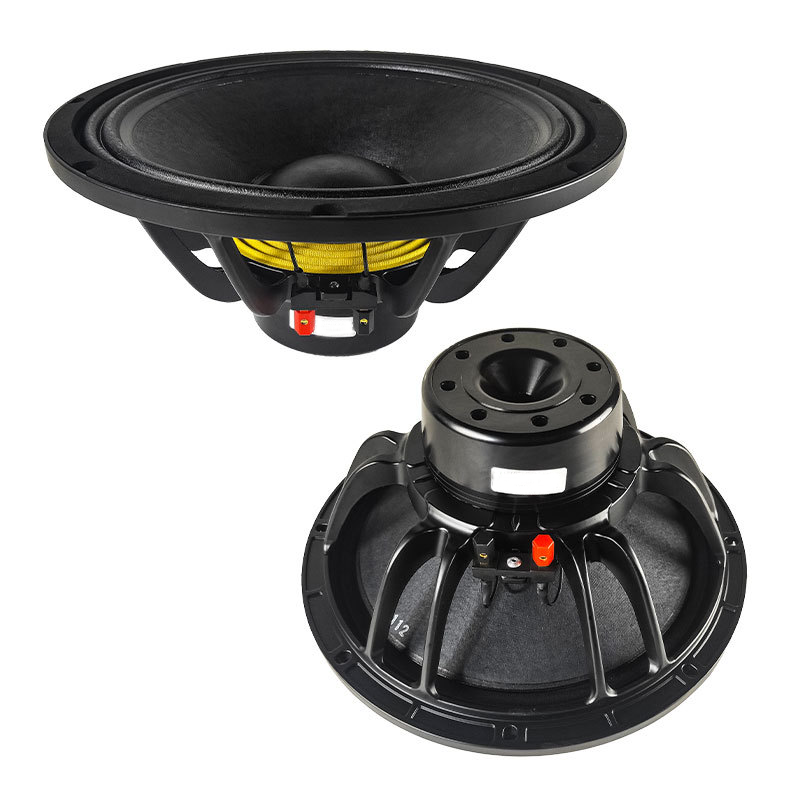
Understanding Deep Bass and Subwoofer Frequency Performance
What Is Deep Bass? Defining Low-Frequency Extension (Down to 20 Hz or Lower)
The term deep bass generally covers sounds below 80 Hz on the frequency spectrum, and top quality subwoofers are designed to reach those really low notes all the way down to around 20 Hz. When we talk about that physical sensation during action scenes in movies, grand symphonies, or EDM tracks at clubs, it's coming from this very low end of the audio spectrum. The industry benchmark known as CTA-2010 sets expectations for good subwoofers, requiring them to maintain consistent output within a 3 dB margin right down to 20 Hz. How people actually perceive these low frequencies can be categorized into three distinct listening areas, each with its own characteristics and requirements for proper reproduction.
- Mid-bass (50–80 Hz): Delivers punch for drums and bass guitars
- Low bass (30–50 Hz): Adds weight to cinematic effects and synth layers
- Ultra-low bass (below 25 Hz): Produces physical vibrations felt through furniture and flooring
Why Frequencies Below 25 Hz Matter for Immersive Audio Experiences
Most people can hear sounds as low as around 20 Hz, but anything below about 25 Hz tends to be felt more than actually heard. These really low frequency sounds actually trigger emotions because they mimic things we experience naturally, such as the rumble of thunderstorms which fall between 14 and 25 Hz, or the ground shaking during earthquakes that sit somewhere between 5 and 20 Hz. A study done last year by researchers looking into infrasound showed something interesting too. They discovered that when exposed to an 18 Hz sound at 70 decibels during films, roughly seven out of ten participants described feeling what they called "environmental tension." This effect makes movies more immersive even though viewers aren't consciously aware they're reacting to these low frequencies.
Measuring Bass Accuracy and Frequency Response Flatness
Accurate bass reproduction depends on frequency response flatness, measured in decibel deviations (±dB) across the low end. A subwoofer maintaining ±1.5 dB variance from 20–100 Hz outperforms models with ±6 dB swings, which often sound boomy or uneven. Critical performance indicators include:
| Measurement | Threshold | Impact |
|---|---|---|
| Group delay (20–80 Hz) | < 15 ms | Ensures tight, musical transients |
| Harmonic distortion | < 3% THD | Preserves clarity at high volumes |
Perceiving Ultra-Low Bass: The Role of Physical Vibration in Home Audio
Low frequency sounds under 25 Hz actually get into our bones and vibrate surfaces around us, making audio experiences feel more real. Some research published in 2022 by the Audio Engineering Society found something interesting when they tested systems with two subwoofers positioned close to where people sit. The participants reported feeling more immersed in the music or movie soundtracks, about 34 percent more presence compared to just having one subwoofer setup. But there's a catch. Putting speakers in corners tends to boost those mid-bass frequencies between 30 and 50 Hz by roughly 9 to 12 decibels because of how sound reflects off walls. This creates an uneven listening experience. While room correction software can fix some of these problems, getting the best performance really depends on choosing subwoofers that handle very low frequencies well rather than simply going for bigger drivers all the time.
Subwoofer Enclosure Types and Their Effect on Deep Bass Output
Sealed vs Ported Enclosures: Which Delivers Better Deep Bass?
Sealed enclosures give us that tight, controlled bass because they trap air inside which acts kind of like a mechanical spring. The result? A much better transient response that really shines when listening to music tracks with complex low end stuff. Now ported designs work differently. They have these tuned vents that actually make them more efficient speakers overall. According to some research from QSC back in 2023, ported boxes can produce around 3 to 6 decibels more output below 30 Hz compared to their sealed counterparts. That extra punch makes ported speakers great for those deep rumbling effects we hear in home theaters and movie soundtracks. But there's a catch. At those really low frequencies, ported systems sometimes struggle with phase issues that can mess up the sound quality if not properly managed during setup.
Bandpass and Other Designs for Enhanced Low-End Extension
Bandpass boxes combine sealed and ported sections to boost certain frequencies, giving them that flat ±1.5 dB response from about 20 to 80 Hz when everything is set just right. These designs are great for blasting out loud sounds at concerts or big gigs where volume matters most. But there are tradeoffs. The phase response gets all messed up on these things, making them tricky to work with sometimes. Plus they need much bigger cabinets than regular ported speakers usually do around 25% larger which makes them pretty impractical for most homes unless someone has serious space available. Still worth considering for pro audio applications though.
Trade-offs in Transient Response, Efficiency, and Bass Depth by Enclosure Type
When it comes to efficiency, ported subwoofers can be around 40 percent more efficient compared to their sealed counterparts, which means they need less power from amplifiers to deliver those same deep bass notes. But there's something to be said about sealed boxes too. They tend to keep things tighter rhythmically with delays below 15 milliseconds, making them great choices for tracking those quick bass runs or crisp synth hits without muddying the beat. For smaller spaces measuring less than 250 square feet, some acoustic testing indicates that having several compact sealed subs scattered around actually gives more consistent bass throughout the room (around -4 dB difference) compared to just one big ported unit sitting somewhere (-9 dB variation). Placement matters quite a bit here though.
Matching Subwoofer Size, Power, and Room Acoustics
How Room Size and Shape Influence Subwoofer Performance and Bass Distribution
The size of a room has a big impact on how bass sounds throughout the space. Rooms smaller than about 2,000 cubic feet tend to boost low frequencies below 40 Hz by around 6 to maybe even 12 decibels because of something called boundary gain. But there's a catch too these small spaces often develop standing waves that make certain areas sound way louder while others get almost no bass at all. Take a typical 10 by 12 foot living room for example it might completely miss out on those deep 28 Hz and 56 Hz tones in some spots. When dealing with bigger spaces over 3,000 cubic feet, regular subwoofers just won't cut it. These larger areas need serious power usually looking at subs with at least 12 inch drivers and probably somewhere north of 500 watts RMS to keep that clean bass going down past 20 Hz without distortion.
Does Bigger Mean Deeper Bass? Understanding Driver Size and Bass Depth
Bigger drivers like those 15 inch models definitely move more air around the room, but bigger doesn't always mean better when it comes to deep bass response. Some really good sounding 10 inch sealed subs have been measured hitting down to about 19 Hz give or take 3 dB according to tests done by independent labs following CEA standards. When we get into bigger rooms though, say anything over 400 square feet, those 12 inch and larger drivers start showing their strengths. They can push out around 115 decibels at 25 Hz without much distortion which makes all the difference for serious movie watching experiences where that low end punch matters so much.
Power Requirements, RMS Ratings, and Amplifier Matching for Clean, Dynamic Output
Match amplifier RMS output to the subwoofer's continuous power handling within ±20%. Underpowering leads to clipping, increasing harmonic distortion by up to 10x at 20 Hz according to AES data. Recommended guidelines:
| Room Size | Target SPL | Minimum RMS Power |
|---|---|---|
| 200 sq.ft | 105 dB | 300W |
| 400 sq.ft | 115 dB | 600W |
CEA/CTA-2010 Standards: Evaluating Real-World Output at High SPLs
The CEA-2010 certification verifies real-world subwoofer performance with rigorous benchmarks:
- 20–31.5 Hz Band: Must produce ≥110 dB SPL at 1 meter
-
Total Harmonic Distortion: <10% at reference levels
Independent evaluations reveal only 38% of consumer-grade subwoofers meet these standards—making certification a key indicator of reliable, high-SPL performance.
Optimal Subwoofer Placement for Smooth and Impactful Low Frequencies
Effective Placement Strategies, Including the Subwoofer Crawl Method
The subwoofer crawl method works wonders for finding optimal placement. Put the sub where someone normally sits, blast some bass heavy tracks, and stroll through the space until the low end feels even across the room. That sweet spot becomes the new home for the sub. Research published last year indicates this approach cuts down on those annoying frequency drops by about 12 dB when compared to just tossing the sub in a corner. Symmetrical spots right in the middle of walls are troublemakers though. They create standing waves between 40 and 80 Hz that mess with the sound quality. According to industry data from 2010, nearly three quarters of all homes struggle with these issues when speakers are placed symmetrically.
Using Multiple Subwoofers to Minimize Room Modes and Improve Coverage
Putting two subwoofers in opposite corners or somewhere in the middle of walls can cut down those annoying bass dead spots by about 60 to 80 percent in smaller rooms that aren't bigger than 4,000 cubic feet. For bigger spaces though, folks usually go with four subs placed at points that divide each wall into quarters. This setup helps keep the sound consistent throughout the room with less than 3 dB difference between any seating position. Something interesting happens when these dual subs work together in sync they actually boost their output at around 25 Hz by 6 dB thanks to something called constructive interference. The best part? This boost doesn't require extra power from the amplifier, so no need to upgrade equipment just for better low end performance.
Leveraging Boundary Gain and Managing Standing Waves
Putting a subwoofer close to walls or in corners can give about 3 to 6 dB extra boost below 50 Hz, though this might make the upper bass range (around 60-100 Hz) sound too strong. If the room sounds boomy, try moving the sub at least 18 inches away from any walls and boundaries. Using a parametric equalizer helps knock down those annoying resonant peaks that build up. For rooms where opposite walls are parallel, placing the sub at an angle or off center works wonders. This kind of positioning cuts down on standing waves by roughly 40 percent when compared to just putting it against the front wall. Most audiophiles find these adjustments make a real difference in sound quality.
Application-Based Selection: Home Theater vs. Two-Channel Music Systems
Home Theater Needs: Handling Explosions and LFE Tracks at High Sound Pressure Levels
When it comes to home theater systems, subwoofers need to handle serious power if they're going to shake the room during those big movie moments and properly handle those low frequency effects tracks. Look for units that can hit around 115 decibels or more when pushed hard without warping the sound quality. Recent tests back in 2023 showed something interesting about modern blockbusters too. About seven out of ten action movies these days actually contain frequencies below 25 Hz specifically during those massive explosion scenes. That means serious requirements for the subwoofer hardware itself. The drivers need to move a lot of air quickly and the internal amplifier has to be strong enough to keep up with all that demand without cutting out on us halfway through the climax.
Two-Channel Music Setups: Prioritizing Bass Accuracy and Tight Frequency Response
For stereo music setups, subwoofers that focus on accuracy rather than sheer volume tend to deliver better results. Most tracks don't really go much lower than 30 Hz according to audio standards research from AES in 2023. But certain types of music actually need those extra low frequencies. Electronic beats and orchestral pieces especially appreciate subwoofers that maintain consistent timing and balanced output down around 80 Hz territory. The sealed box designs generally work out best for this purpose. They let sounds fade away more quickly which helps keep the middle frequencies clear and maintains the rhythm's natural flow without getting muddy.
Comparing Dynamic Range and Sustained Bass Demands Across Use Cases
| Factor | Home Theater | Two-Channel Music |
|---|---|---|
| Dynamic Range | 30+ dB swings (explosions) | 10–15 dB typical |
| Sustained Bass Duration | Up to 3 seconds for effects | <1 second for kick drums |
| Critical Frequency Range | 16–80 Hz | 28–120 Hz |
Home theater applications stress thermal endurance and peak output, while two-channel setups prioritize articulation and integration with main speakers.
FAQ
What is deep bass? Deep bass generally refers to sounds below 80 Hz, with subwoofers designed to reach very low notes down to around 20 Hz.
Why are frequencies below 25 Hz important? Frequencies below 25 Hz are often felt more than heard and contribute to immersive audio experiences by mimicking natural occurrences like thunder.
How does subwoofer placement affect audio quality? Proper placement is crucial for reducing frequency drops and ensuring consistent sound quality. The subwoofer crawl method helps identify optimal placement.
What are the pros and cons of sealed vs ported enclosures? Sealed enclosures offer tight bass and better transient response, whereas ported designs provide more output at lower frequencies but can have phase issues.
Does the size of a subwoofer driver affect bass depth? Larger drivers can move more air and perform better in bigger rooms, but smaller drivers also achieve impressive results, especially in smaller spaces.
Table of Contents
- Understanding Deep Bass and Subwoofer Frequency Performance
- Subwoofer Enclosure Types and Their Effect on Deep Bass Output
- Matching Subwoofer Size, Power, and Room Acoustics
- Optimal Subwoofer Placement for Smooth and Impactful Low Frequencies
- Application-Based Selection: Home Theater vs. Two-Channel Music Systems