
 EN
EN



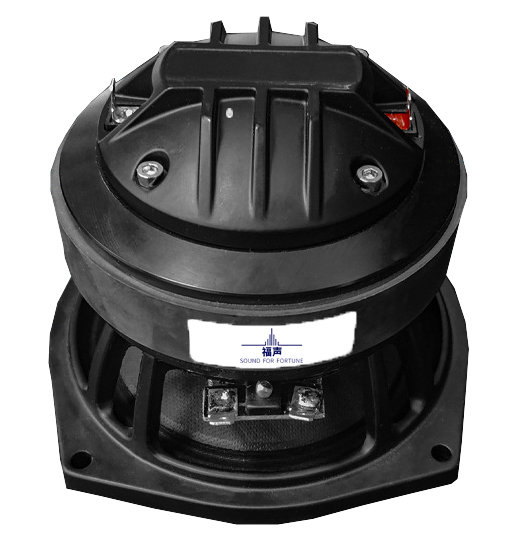
How Subwoofer Technology Enables Deep, Accurate Bass
Core Design Principles: Driver Size, Excursion, and Cabinet Rigidity
Getting that rich, powerful bass right depends on getting three key engineering factors just right. Bigger drivers, usually around 10 to 15 inches in size, move more air which helps reproduce those really low frequencies all the way down to about 20 Hz. That's actually where sound starts feeling more like a physical vibration than something we just hear. The driver needs enough travel range too so the cone can move back and forth without distorting, especially when dealing with sudden loud bursts in the music. And let's not forget about what's happening inside the speaker enclosure itself. A solid build matters a lot here. Manufacturers use thick MDF boards and add braces at strategic points to keep the box from vibrating unnecessarily. These vibrations would mess with the timing and make it harder to tell different notes apart. When all these elements work together properly, they create speakers that handle low frequencies accurately while maintaining their structural integrity during playback.
Frequency Response (20 Hz–200 Hz) and the Role of Active Amplification
The 20 to 200 Hz frequency range creates special challenges for audio equipment since it needs consistent power delivery to keep speaker cones moving during long bass notes, not just short bursts of loud sound. Most subwoofer amps come in the 300 to 1000 watt range and deliver steady current that keeps the system working linearly without compressing the signal. Why does this matter? Our ears actually sense these frequencies as physical pressure changes instead of distinct musical notes. Small distortions or timing issues here really affect how immersive the listening experience feels. Good matching between components makes all the difference too. Proper setup lets subs work smoothly with regular speakers so everything sounds cohesive whether someone is hearing the slow fade of a cello note or feeling the punch of an action movie explosion.
Subwoofer Enclosure Types: Sealed, Ported, and Bandpass Performance Trade-Offs
The way subwoofer enclosures affect bass response depends on several acoustic factors. Sealed designs produce tighter, more accurate sound with lower distortion levels. They work great for situations where precise timing matters most, such as when reproducing jazz or classical music. However, these enclosures need quite a bit of amplifier power just to get decent volume levels out of them. Ported or bass reflex enclosures take a different approach by adding a specially tuned vent that boosts output around certain frequencies. This typically gives about 3 to 6 dB more efficiency compared to sealed boxes. The result is punchier, more resonant bass that many people prefer for genres like rock and hip hop. But there's a catch too. These enclosures must be carefully adjusted to prevent unwanted noise from the port itself, plus they tend to take up more room in general. Bandpass enclosures mix elements of both sealed and ported designs. They focus all their energy into a very specific range of frequencies, which can boost output by around 10 dB above standard sealed models. That's why we see them dominating speaker competition events where maximum loudness counts. Unfortunately, this comes at a price. Bandpass systems are complicated to build, occupy significant space, and don't really work well across all types of music.
| Enclosure Type | Bass Characteristic | Space Requirement | Efficiency | Best Application |
|---|---|---|---|---|
| Sealed | Tight, accurate | Compact | Lower | Critical listening |
| Ported | Resonant, powerful | Moderate–large | Higher | High-output music |
| Bandpass | Extreme narrow-band | Large | Highest | SPL competitions |
Enclosure choice ultimately reflects practical constraints and sonic priorities: compact spaces and accuracy needs favor sealed designs; dedicated home theaters often leverage ported efficiency; and bandpass remains a specialized tool where targeted output outweighs flexibility.
Optimizing Subwoofer Integration for Seamless System Synergy
Crossover Settings, Phase Alignment, and Gain Calibration
Getting everything working together smoothly starts with careful setup work that goes beyond simply matching volumes. We're talking about aligning both timing and frequencies properly. Most folks start their subwoofer settings around 80 Hz since that's what standards organizations recommend for home theater systems, though adjustments will depend on how high our main speakers can actually go before they drop off. When setting phase controls between 0 degrees and 180 degrees, play some test tones right at that crossover point to find where sound waves aren't canceling each other out. Finding the right balance in volume levels is crucial too. If we push things too hard, details get lost and compression kicks in. Studies show good calibration cuts down on unwanted distortions by roughly a quarter to a third, which makes all those deep bass hits from kick drums and cellos sound much cleaner. And don't forget where we put the sub matters a lot. Corners give extra punch but create annoying resonances, whereas trying different spots along walls often reveals better sounding locations overall.
Key calibration targets:
- Frequency overlap: ±10% between subwoofer and satellites
- Phase error: <90° at crossover point
- Dynamic headroom: +3 dB above average listening level
This methodical approach transforms the subwoofer from a standalone bass source into an invisible, foundational layer—delivering immersive, evenly distributed low frequencies that anchor the entire soundstage.
FAQ
What driver size is recommended for subwoofers?
Bigger drivers, often around 10 to 15 inches, are recommended as they can move more air, effectively reproducing frequencies down to 20 Hz.
What are the differences between sealed, ported, and bandpass enclosures?
Sealed enclosures provide tight and accurate bass but require more power. Ported enclosures offer resonant bass and are more efficient but can introduce unwanted noise if not tuned well. Bandpass enclosures focus sound energy on specific frequencies, ideal for maximum loudness in competitions.
How important is subwoofer placement in a room?
Subwoofer placement significantly affects sound quality. Positioning in corners may add punch but also create resonances. It's advisable to test different locations along walls for optimal sound distribution.
What crossover settings are ideal for subwoofer integration?
Subwoofer crossover settings often begin around 80 Hz, but adjustments may be needed based on the frequency range of main speakers to ensure cohesive sound without cancellation.