
 EN
EN



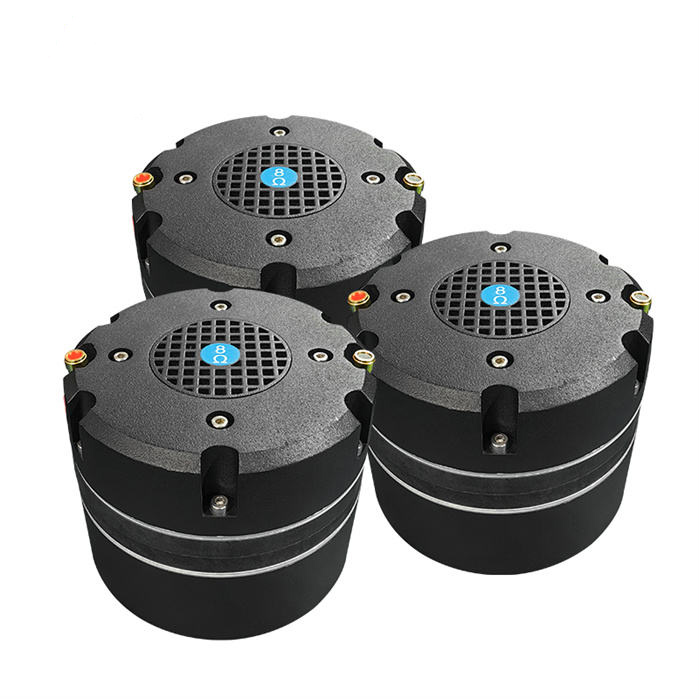
Driver Fundamentals: Definition, Core Function, and Transduction Principle
What Is a Driver? A Clear, Technical Speaker Driver Definition
At the heart of every speaker sits what's technically called an electroacoustic transducer, though most people just know it as a driver. Basically, this component takes those electrical signals from our music players and turns them into actual sounds we can hear. Inside, there's a voice coil floating around inside a magnetic field, connected to something called a diaphragm which comes in either cone shapes or domes. This part moves back and forth, pushing air around to create sound. The whole thing stays aligned thanks to these flexible parts known as surrounds and spiders that let everything move precisely but stay centered. When electricity passes through that voice coil, magnets push and pull it, making the diaphragm vibrate exactly how the original music wanted. Those tiny movements create changes in air pressure that we perceive as sound waves. How well a speaker performs really depends on how good its driver is designed. After all, without a solid driver working properly, no amount of fancy cabinet design will make much difference in how the music actually sounds when it reaches our ears.
How the Driver Acts as an Electromechanical Transducer
Drivers work using something called electromagnetic transduction, basically a two step process for converting energy. Let's break it down. First off, when electricity from an amplifier passes through the voice coil, it creates a moving magnetic field. This field interacts with the fixed magnetic field coming from the permanent magnets inside the driver. What happens? Well, we get these push and pull forces happening all the time. Now comes the second part of the process. These push-pull forces make the voice coil move back and forth in straight lines. As it moves, it pushes against the diaphragm attached to it, transferring that mechanical movement into actual physical vibrations. And guess what those vibrations do? They knock around air molecules, creating those longitudinal sound waves we hear as music or speech. Speaking of which, the suspension system is really important too. It keeps things from going too far out of control during big movements, maintaining that straight line motion so everything stays clear and distortion free. Without proper suspension, sounds would get all messed up, especially when dealing with frequencies from deep bass at 20 Hz right up to high treble at 20 kHz where our ears can still pick stuff up.
Inside the Driver: Key Components and Their Physical Roles
Voice Coil, Magnet Assembly, Diaphragm, and Suspension - How Each Enables Sound Production
Four interdependent components enable precise electromechanical conversion in every driver:
- Voice Coil: A wound conductor that moves within the magnetic gap; its electrical resistance and mass influence thermal handling and transient response.
- Magnet Assembly: Provides the fixed magnetic field essential for electromagnetic interaction. High-grade neodymium magnets deliver superior flux density and size-to-strength ratios compared to traditional ferrite.
- Diaphragm (Cone/Dome): Attached to the voice coil, it radiates sound by displacing air. Material choice-paper, polymer, aluminum, or composite-directly affects rigidity, damping, and resonance control.
- Suspension (Spider & Surround): Anchors the diaphragm while permitting axial motion. Modern bonded active suspension (BAS) designs support ±2 mm linear excursion with improved thermal stability and longevity.
| Component | Primary Function | Material Impact |
|---|---|---|
| Voice Coil | Converts electrical energy to motion | Copper/aluminum affect conductivity, mass, and heat dissipation |
| Magnet Assembly | Creates fixed magnetic field | Neodymium boosts field strength/size ratio; improves sensitivity and control |
| Diaphragm | Air displacement for pressure waves | Composites reduce breakup modes and resonance distortion |
| Suspension System | Controls linear excursion, recenters coil | Temperature-resilient polymers enhance reliability under sustained load |
This integrated design defines the driver™s power handling, distortion thresholds, and frequency response accuracy. Compromises in material selection, dimensional tolerance, or mechanical integration degrade performance irreversibly.
Driver Types and Frequency Specialization in Speaker Systems
Speaker systems use specialized drivers to cover distinct portions of the audible spectrum-each optimized for physical responsiveness, air displacement, and resonant behavior.
Speakers work differently depending on what part of the audio spectrum they need to cover. Tweeters are responsible for those crisp high frequencies ranging from around 4 kHz all the way up past 20 kHz. These tiny components usually have domes about 25 mm across made from materials that allow them to vibrate quickly without creating much unwanted noise or distortion. When measuring performance, good tweeters will maintain under 0.3% total harmonic distortion even at loud listening levels. For the deep bass sounds between 40 Hz and 500 Hz, woofers take over with their large moving parts. These drivers typically measure anywhere from 165 mm to 300 mm in size because they need to push significant amounts of air to produce those powerful low notes we feel as well as hear. Midrange drivers sit right in between these extremes covering approximately 500 Hz to 4 kHz. Their cones range from roughly 75 mm to 130 mm in diameter and are specifically crafted to deliver clear vocals and accurate instrument reproduction since this is where most musical content actually resides.
| Driver Type | Frequency Range | Diaphragm Size | Key Design Focus |
|---|---|---|---|
| Tweeters | 4 kHz-20 kHz+ | ~25 mm | High-frequency precision, low inertia, minimal breakup |
| Midranges | 500 Hz-4 kHz | 75 mm-130 mm | Balanced rigidity and damping for natural midband articulation |
| Woofers | 40 Hz-500 Hz | 165 mm-300 mm | Structural integrity, long-excursion capability, low-frequency extension |
The reason for this specialization lies in basic physics principles. Small diaphragms react fast but just don't have enough mass or surface area to produce good bass response. On the flip side, bigger diaphragms can move more air which helps with low frequencies, but they tend to lag behind at higher frequencies because of their inertia. How stiff the material is, where the mass is distributed across the cone, and how linear the motor system behaves all play major roles in what range a particular driver can handle effectively. That's why multi-driver setups work so well. They basically divide up the workload between different drivers specialized for various frequency ranges, allowing speakers to cover the entire audio spectrum smoothly without having to sacrifice quality somewhere along the way.
Tweeters, Woofers, and Midranges: Why Driver Design Dictates Frequency Range
How Driver Performance Shapes Critical Speaker Metrics
Sensitivity, Distortion, and Impedance - Direct Driver-Driven Characteristics
The sensitivity of a driver, measured in decibels per watt at one meter distance, basically tells us how good it is at turning electrical power from an amp into actual sound waves. When drivers have higher sensitivity ratings, they put less strain on amplifiers and give better dynamic response, which matters quite a bit for passive speaker setups. Distortion happens because of various physical limits in the driver components. Voice coils can overheat, suspensions might not behave linearly under stress, and sometimes the diaphragm just breaks up when pushed too hard. These issues create unwanted harmonics or intermodulation effects that mess with the original signal. Keeping total harmonic distortion (THD) under 1% while running at full power helps maintain clean sound reproduction without losing those fine details we all listen for. Then there's impedance, which refers to how much resistance the driver offers to alternating current flow. This determines what kind of amplifier works best together with the driver and affects how stable the power transfer remains during operation. Most drivers fall within a 4 to 8 ohm range, making them compatible with many different amps while reducing risk of overheating problems and strange phase interactions between components. All these performance characteristics come down to fundamental design choices made at the driver level itself, including things like motor structure, heat dissipation strategies, suspension flexibility, and materials used for the moving parts of the driver assembly.
Why Driver Quality Is the Foundation of Overall Speaker System Fidelity
The quality of drivers really matters when it comes to how accurate speakers sound. Good drivers handle all sorts of music styles without losing their character or getting distorted. Top tier models often feature things like stronger diaphragms, special pole pieces with vents, and better cooling for those voice coils which helps them stay consistent even after hours of playing loud music. When a driver maintains steady impedance levels, it keeps the power flowing smoothly so details don't get lost in quieter moments or washed out during big crescendos. The suspension system and motor design also play important roles in preserving subtle sounds during soft sections while still keeping up with intense musical passages without breaking down. What makes this so crucial? Well, great drivers work much better with crossovers and fit better inside speaker cabinets too, reducing annoying phase issues and unwanted resonances from the cabinet itself. No matter how fancy the cabinet looks or how advanced the digital signal processing might be, none of these will fix problems that start right at the point where sound actually gets created. At the end of the day, most audiophiles would agree that everything boils down to having good drivers at the heart of any serious audio setup.
FAQs
What is the primary function of a speaker driver?
The primary function of a speaker driver is to convert electrical signals from a music player or amplifier into sound waves that we can hear. It does this using a diaphragm that moves in response to electrical currents passing through a voice coil within a magnetic field.
How do voice coils and magnets work together in a driver?
Voice coils and magnets work together in a driver through electromagnetic transduction. When electricity passes through the voice coil, it creates a magnetic field that interacts with the permanent magnetic field of the magnets, causing push and pull forces. These forces make the voice coil and attached diaphragm move, producing sound.
What materials are commonly used in making diaphragms?
Diaphragms are commonly made from materials like paper, polymer, aluminum, and composite materials. The choice of material affects the diaphragm's rigidity, damping, and resonance control, impacting the overall sound quality.
Why do speakers use multiple drivers?
Speakers use multiple drivers to cover the full audible spectrum efficiently. Tweeters handle high frequencies, midranges address the middle spectrum, and woofers take care of low frequencies, ensuring each part of the audio range is accurately reproduced.
Why is driver quality crucial for speaker systems?
Driver quality is crucial because it directly influences the accuracy and fidelity of sound reproduction. High-quality drivers ensure sound remains clear and undistorted across a range of volumes and frequencies, enhancing the overall listening experience.