
 EN
EN



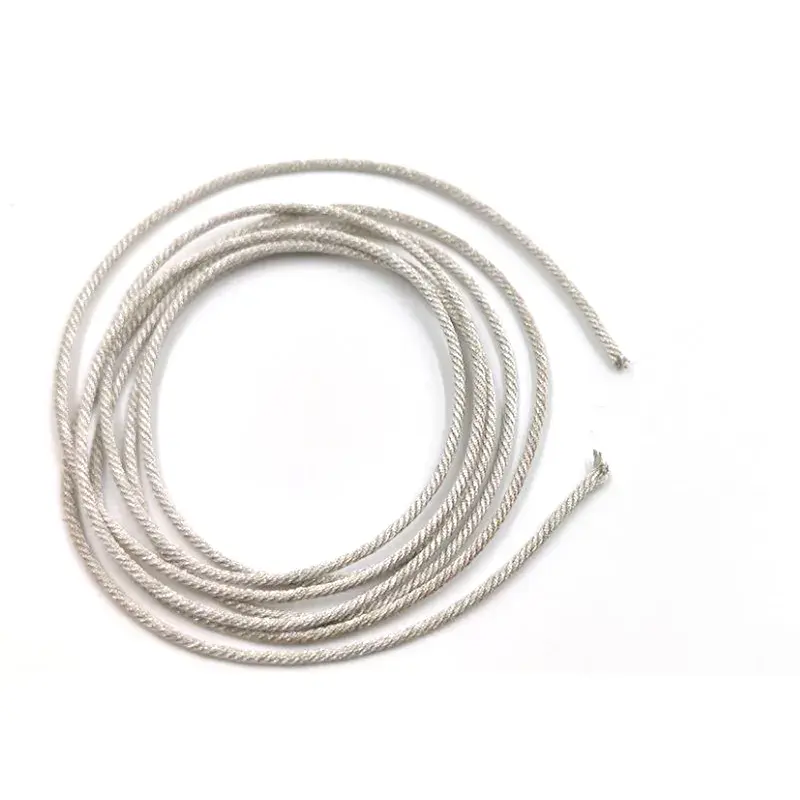
Why Voice Coil Lead Wire Must Withstand Extreme Thermal Stress
Power-Induced Thermal Stress in High-Excursion and Compression Drivers
Most high excursion woofers and compression drivers manage to turn just about 3 to 5 percent of their electrical power into actual sound energy. The rest? Well, around 95 to 97 percent ends up as heat inside those voice coil assemblies. When these speakers run at full power for any length of time, say 100 watts continuously, things get really hot pretty fast. Temperatures can go past 200 degrees Celsius within minutes, sometimes even reaching close to 250C in certain parts of compression drivers. All this heat causes problems over time. Metal parts start to oxidize, plastic insulation breaks down, and the whole system suffers from gradual wear and tear. If there's no good thermal protection built in, lead wires tend to fail early on because the insulation turns to carbon, solder joints crack under stress, or worse still, the voice coils themselves deform from all that heat exposure.
How Lead Wire Thermal Conductivity Directly Affects Voice Coil Temperature Rise
Lead wire serves as a critical thermal bridge from the voice coil to the terminal. Copper's high thermal conductivity (401 W/m·K) reduces peak voice coil temperatures by up to 15% compared to aluminum—directly mitigating three key failure modes:
- Resistance spikes: Each 10°C rise increases voice coil resistance by ~4%, inducing thermal compression that lowers output by 1–3 dB;
- Solder joint fatigue: Poor heat conduction creates steep thermal gradients (>80°C/mm) at terminations, accelerating crack initiation;
- Insulation breakdown: Sustained exposure above 220°C degrades polymer dielectrics, raising short-circuit risk.
Optimized lead wire materials with high thermal diffusivity help maintain voice coils below critical thresholds, preserving frequency response linearity during extended high-power operation.
Material Selection for High-Temperature Lead Wire: Copper, Aluminum, and CCA
Oxidation, Creep, and Fatigue Behavior Above 180°C
When exposed to temperatures consistently above 180 degrees Celsius, various lead wire materials start breaking down in different ways. Take copper for instance it develops brittle oxide layers over time. After about 500 thermal cycles, these oxides can actually boost electrical resistance by as much as 30 percent according to research published in the Materials Performance Journal last year. Aluminum holds up better against oxidation generally speaking, but there's another problem. The metal tends to stretch out when subjected to normal voice coil tension, elongating anywhere from 0.5 to 1.2 percent. Copper-clad aluminum offers some protection against surface oxidation thanks to its outer copper layer. However, this composite material faces issues at the interface between layers because of differing thermal expansion rates. This leads to delamination problems that cut fatigue life down by roughly 40 percent compared to solid conductor materials. If manufacturers want their products to last longer without failure, they need to consider modifying alloys or applying protective coatings during production processes.
Balancing Resistivity, Thermal Expansion, and Cycle Life in Lead Wire Design
Designing robust lead wire requires reconciling resistivity, thermal expansion, and mechanical endurance. Key trade-offs include:
| Property | Copper | Aluminum | CCA |
|---|---|---|---|
| Resistivity | 1.68 μΩ·cm | 2.82 μΩ·cm | ~2.8 μΩ·cm |
| Thermal Expansion | 17 ppm/°C | 23 ppm/°C | Differential |
| Cycle Life @200°C | 10k cycles | 7k cycles | 6k cycles |
The low resistivity of copper helps reduce those pesky I squared R losses, though it comes at a price both literally and in terms of added weight. When working with aluminum, engineers need to keep in mind its higher expansion coefficient which means bigger bend radii are necessary to prevent stress on solder joints during operation. Cost savings can be achieved through CCA solutions, but these require careful engineering of strain relief mechanisms to handle the shear forces between materials. For equipment that needs to withstand over 100 thousand thermal cycles, like high quality touring compression drivers for instance, specially formulated copper alloys become essential. These alloys have been designed with specific expansion coefficients around 18 parts per million per degree Celsius, striking a great compromise between performance and durability. They maintain nearly all of pure copper's impressive conductivity levels while offering much better resistance to metal fatigue over time.
Tinsel Lead Wire: Optimizing Flexibility and Heat Dissipation at High Temperatures
Tinsel lead wire must simultaneously withstand extreme flexing and thermal loads exceeding 200°C—particularly in high-excursion woofers and high-frequency compression drivers. Its geometry and material structure directly influence both mechanical longevity and thermal management.
Solder Joint Fatigue Failure Mechanisms Under Thermal Cycling
Solder joints break down over time when exposed to repeated heating and cooling cycles. This happens mainly because of three things working together: differences in how much materials expand when heated, the buildup of brittle compounds at the interface, and slow shape changes under constant pressure. When conductors and terminals expand at different rates during temperature swings, they create shearing forces that weaken the connection. The intermetallic compounds that form between metals get tougher and less flexible once temperatures go past about 150 degrees Celsius. And then there's the gradual distortion from ongoing mechanical stress that makes the solder slowly deform. Studies show something pretty significant too - if operating temperatures rise just 50 degrees above what's recommended, the lifetime of these connections can drop by around 40%. Good strain relief solutions placed before the actual solder joint help absorb all that movement and heat expansion before it gets to the vulnerable spot, which means longer lasting connections overall.
Stranded vs. Flat Tinsel Geometry: Impact on Bend Radius and Thermal Performance
Conductor geometry determines flexibility, fatigue resistance, and cooling efficiency:
| Characteristic | Stranded Tinsel | Flat Tinsel |
|---|---|---|
| Minimum bend radius | 2x wire diameter | 8x wire diameter |
| Heat dissipation | 15% lower (air gaps) | Direct surface conduction |
| Fatigue resistance | 50k+ cycles | 20k cycles |
| Thermal path | Indirect through insulation | Direct copper-to-air |
When tight bends are needed, like those found in big woofers that move a lot, stranded tinsel works best. Flat tinsel on the other hand handles heat much better in small spaces where compression drivers get hot. Some recent tests at the lab showed that when using optimized flat tinsel, voice coils run about 12 degrees cooler than similar stranded versions. This temperature difference makes flat tinsel a real winner for applications where high frequency components need to work hard for long periods without overheating.
Insulation Systems That Enable Reliable Lead Wire Operation Beyond 220°C
Regular PVC and silicone insulation starts to break down quickly when temperatures go over 220 degrees Celsius. This breakdown can cause serious problems like dielectric failure and exposed conductors. Advanced insulation systems made with polyimide films and fluoropolymers such as PTFE work much better. These materials stay strong and maintain their electrical properties even when running continuously at temperatures as high as 260 degrees. Standard coatings don't match up well with copper in terms of how they expand when heated, which leads to tiny cracks forming after many temperature changes. The new materials solve this issue. What's more, these advanced insulations are incredibly thin, often less than 50 micrometers thick. This thinness helps transfer heat away from the conductor to the surrounding environment while still keeping good electrical separation. Testing has shown that in 10,000 hour trials at 240 degrees Celsius, the failure rate drops by around three quarters compared to traditional options. This means audio equipment using these materials maintains consistent sound quality in powerful compression drivers without worrying about wires deteriorating over time.
FAQ
Why is it important for voice coil lead wires to withstand extreme thermal stress?
Voice coil lead wires must withstand extreme thermal stress because when speakers operate at high power, most of the electrical energy is converted to heat. This excessive heat can lead to oxidation, insulation breakdown, and deformation, affecting sound quality and equipment durability.
What are the advantages of using copper lead wires?
Copper lead wires offer high thermal conductivity, reducing peak voice coil temperatures, mitigating resistance spikes and solder joint fatigue, and preventing insulation breakdown, thereby preserving the speaker's performance over extended use.
How do advanced insulation systems improve lead wire performance?
Advanced insulation systems like polyimide films and fluoropolymers prevent dielectric failure and maintain electrical properties even at high temperatures. They provide better thermal expansion compatibility with copper, reducing cracks and extending the wire's operational life.